Thailand's Andaman Coast · Island destination
Phuket
Phuket is Thailand’s largest island and a province in the Andaman Sea off southern Thailand’s west coast, linked to Phang Nga by the Sarasin Bridge. It combines a mountainous spine, a chain of west-coast beaches, and a Sino-Portuguese old town, with day-boat links across Phang Nga Bay toward Krabi and the Phi Phi islands.
Overview
Overview
Phuket is Thailand’s largest island and a province in the Andaman Sea off southern Thailand’s west coast, linked to Phang Nga by the Sarasin Bridge. It combines a mountainous spine, a chain of west-coast beaches, and a Sino-Portuguese old town, with day-boat links across Phang Nga Bay toward Krabi and the Phi Phi islands.
Phuket has no railway; ferries and speedboats link it to Phi Phi, Krabi, and nearby islands, and getting between beach areas generally needs planned transport.
Stay
Where to stay
See how the main places to stay differ in location, atmosphere and getting around.
Patong
Phuket’s busiest nightlife and an active beach-strip stay.
Kata & Karon
Beach-focused west-coast stays with less intensity than Patong.
Rawai
A more residential southern base, with more travel for west-coast beach evenings.
Phuket Old Town
Heritage streets and dining with a more urban evening rhythm than beach belts.
Experience
What it's like
The western mountain range drops to sandy tourist beaches, while the east side is more working-harbour oriented. Phuket Town has Sino-Portuguese shophouse streets from the tin-trading era. Tourism infrastructure is densest on the developed west coast; protected rainforest remains at Khao Phra Thaeo and coastal parkland at Sirinat.
Areas to know
These are reference descriptions of areas within Phuket — not a stay comparison.
- Patong — Most developed west-coast beach town, with dense lodging, shopping, and nightlife.
- Karon & Kata — Developed beaches south of Patong.
- Kamala / Surin / Bang Tao — West-coast beaches north of Patong.
- Mai Khao / Nai Yang — Northwest beaches near Sirinat National Park and the airport.
- Phuket Town / Old Town — Provincial centre with Sino-Portuguese streets.
- Rawai / Nai Han / Chalong / Cape Panwa — Southern and southeastern bays and boat gateways.
- Laem Phromthep — Southern cape viewpoint.
Culture and sights
Reference sources describe a west-coast beach chain, Old Town Chinese heritage, an annual Vegetarian Festival pattern, and 2004 tsunami historical context. Public examples include the Big Buddha, Wat Chalong, the Two Heroines Monument, the Thalang National Museum, Sirinat National Park, Khao Phra Thaeo, and coastal viewpoints.
Things to do
- West-coast beach time — Patong, Karon, Kata, Kamala, Surin, Bang Tao
- Boat trips and diving — Day boats, diving, snorkelling, and sailing/marina culture
- Old Town and heritage — Sino-Portuguese shophouse streets and heritage events
- Viewpoints and temples — Laem Phromthep, Big Buddha, Wat Chalong
- Regional relationships — Phang Nga Bay, Phi Phi, the Similan Islands, and Krabi as geographic relationships, not ranked substitutes
Plan your visit
Plan your visit
When to go
Reference climate framing describes a relatively drier period roughly December–March and a wetter period through much of May–October, with rain still possible in the drier months.
Getting there & around
Getting there
Phuket International Airport (HKT) handles domestic and international routes. There is no railway on the island; road connections from the mainland and buses serve the island, and ferries and speedboats connect Phuket's piers with Phi Phi, Krabi, and nearby islands.
Getting around
Common transport modes described by reference sources include songthaews, the Smart Bus corridor, tuk-tuk-style vans, taxis, rideshare apps, and motorbike or car rental. Island scale means beach-to-beach movement generally requires planned transport — this is kept here as a fact of scale, not a modal recommendation.
Information used
Information used
Reference information — Wikipedia · Wikivoyage · Tourism Authority of Thailand · Wikidata — ordinary geography, place identity, historical context, and broadly established characteristics.
Wherely research — W3-EPIC-012 L3 Decision-Depth Promotion Wave 1 V1 — airport-arrival, island-transport, monsoon-season swim-safety, and flight-routing decision guidance under Plan's practical-guidance disclosure, sourced from Thailand Wave 1 Vertical Depth Production V1 (DEPTH_READY_INTERNAL, independently re-reviewed; unit IDs PHK-U1/PHK-U3/PHK-U4/PHK-U5). Wherely's governed stay-area comparison — the area distinctions and tradeoff cues in Stay are Wherely's synthesis of approved area evidence. Wherely also adds a small amount of additional governed guidance in Stay and/or Plan your visit where it offers a genuinely distinct point beyond what is already shown.
Photo credit
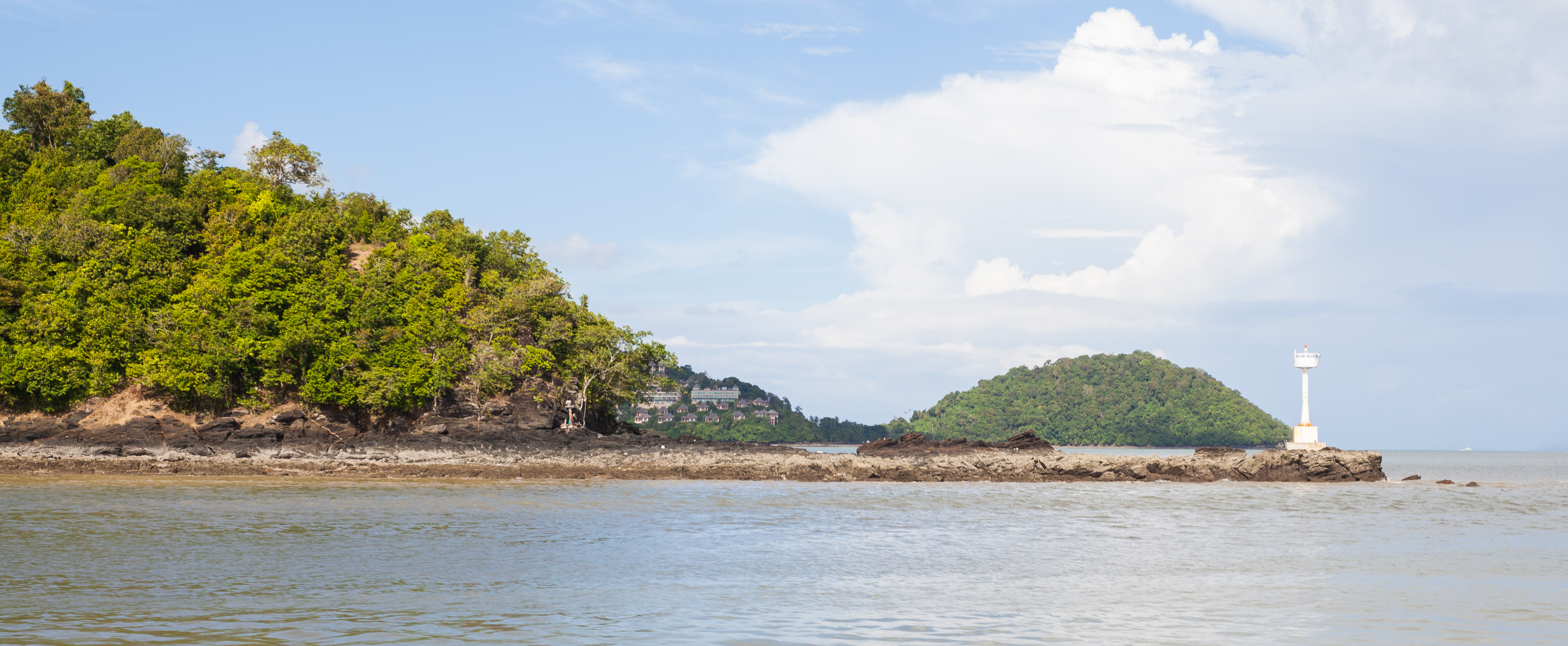
Hero photograph: Port of Phuket, Thailand by Diego Delso, licensed under CC BY-SA 3.0.
What to do next
What to do next
Return to Thailand's Andaman Coast when you want the wider geography, or save this Place when it still fits.