Northern Thailand · City
Chiang Mai
Chiang Mai is northern Thailand’s largest city and the capital of Chiang Mai Province, founded in 1296 as the Lan Na kingdom's capital. It sits on the Ping River with Doi Suthep rising to the west, and a square moated old city anchors its historic centre.
Overview
Overview
Chiang Mai is northern Thailand’s largest city and the capital of Chiang Mai Province, founded in 1296 as the Lan Na kingdom's capital. It sits on the Ping River with Doi Suthep rising to the west, and a square moated old city anchors its historic centre.
Chiang Mai's historic core sits inside a square moat, with the wider city and mountains, including Doi Suthep, extending well beyond it.
Stay
Where to stay
See how the main places to stay differ in location, atmosphere and getting around.
Old City
Inside the moat, close to temple walks. A large share of hotels also sits east of the walls toward the Night Bazaar.
East of the moat / Ping River
Hotels and the Night Bazaar between the eastern wall and the river.
Nimman
Northwest of the old city, around Nimmanhaemin Road: boutique guesthouses and student nightlife rather than the Night Bazaar strip.
Experience
What it's like
The historic core is a roughly square, moated old city with surviving gates and corners and many Lanna-era temples. Modern Chiang Mai spreads especially east toward the Ping River and west toward the university and Doi Suthep corridor. Crafts and folk arts are part of the city's official Creative City profile.
Areas to know
These are reference descriptions of areas within Chiang Mai — not a stay comparison.
- Old City — Historic temples, gates, and plazas inside the moat.
- Tha Phae Gate & east wall — Gate plaza and the start of the Sunday Walking Street.
- Ping River / Changklan–Night Bazaar — Evening market and riverfront belt.
- Warorot (Kad Luang) — Large market district by the Ping River.
- Wualai — Traditional silver-working street and the Saturday Walking Street.
- Nimmanhaemin — West/northwest area with contemporary shops, cafés, and malls.
- Suthep / Huay Kaew — University area, zoo foothills, and the mountain road toward Doi Suthep.
History and culture
Chiang Mai was founded by King Mangrai as the Lan Na capital, and distinctive Lanna architecture and Northern Thai cultural identity remain visible today. Public examples include Wat Chiang Man, Wat Phra Singh, Wat Chedi Luang, and Wat Phra That Doi Suthep. Doi Suthep–Pui National Park and Doi Inthanon are the city's mountain relationships; Wiang Kum Kam, city museums, Warorot, the Night Bazaar, and the walking streets are further reference categories. Northern foods such as khao soi, hang ley, and sai ua are commonly cited.
Things to do
- Temples and Lanna heritage — Wat Chiang Man, Wat Phra Singh, Wat Chedi Luang
- Markets and walking streets — Warorot, Night Bazaar, Sunday and Saturday walking streets
- Mountain and park time — Doi Suthep–Pui National Park, Doi Inthanon
- Crafts, cooking, and language — Craft workshops, cooking classes, massage and meditation courses
- Regional outings — Lamphun, Chiang Rai, and the Pai / Mae Hong Son loop as geographic relationships with a different transfer scale
Plan your visit
Plan your visit
When to go
Broad reference framing describes a cooler, drier period roughly November–February, a hotter period roughly March–June, and a wetter period roughly July–October. Seasonal haze is a separate, decision-sensitive topic that this reference layer does not resolve.
Getting there & around
Getting there
Chiang Mai International Airport (CNX) lies a few kilometres southwest of the centre. The Northern rail line terminates at Chiang Mai; long-distance coaches use the Arcade Bus Station, and Chang Phuak serves many provincial services.
Getting around
Common transport modes described by reference sources include songthaews, tuk-tuks, ride-hailing, limited city buses, motorbike or bike rental, and walking within the compact old city. Distances grow outside the moat, and traffic congestion occurs at peak periods.
Information used
Information used
Reference information — Wikipedia · Wikivoyage · Tourism Authority of Thailand · Wikidata — ordinary geography, place identity, historical context, and broadly established characteristics.
Wherely research — W3-EPIC-012 L3 Decision-Depth Promotion Wave 1 V1 — arrival-mode, getting-around, and cool-vs-burning-season decision guidance under Plan's practical-guidance disclosure, sourced from Thailand Wave 1 Vertical Depth Production V1 (DEPTH_READY_INTERNAL, independently re-reviewed; unit IDs CNX-U1/CNX-U3/CNX-U4). Wherely's governed stay-area comparison — the area distinctions and tradeoff cues in Stay are Wherely's synthesis of approved area evidence. Wherely also adds a small amount of additional governed guidance in Stay and/or Plan your visit where it offers a genuinely distinct point beyond what is already shown.
Photo credit
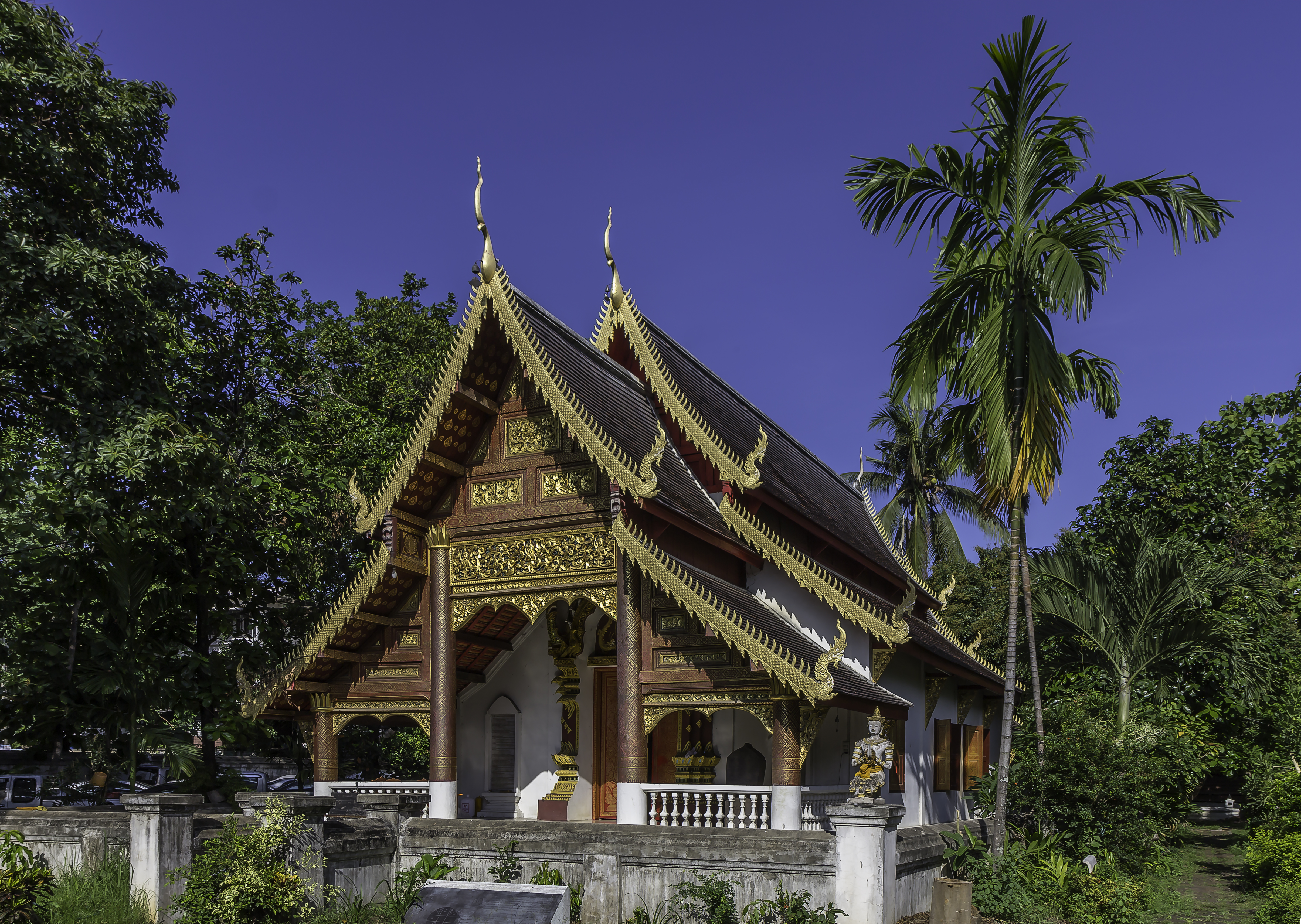
Hero photograph: This is a photo of a monument in Thailand identified by the ID by Stefan Fussan, licensed under CC BY-SA 3.0.
What to do next
What to do next
Return to Northern Thailand when you want the wider geography, or save this Place when it still fits.